
🎯 Quick Summary: The 4 Rules for Washing Hi-Vis Workwear
- Cold Water Only: Hot water degrades reflective tape bonding and fades fluorescent fabric faster than almost anything else.
- No Bleach, No Fabric Softener: Both permanently destroy the retroreflective glass bead layer. Use mild detergent only.
- Wash Inside Out & Separately: Turns the tape face away from agitation. Never mix with jeans or heavy rough fabrics.
- Air Dry or Lowest Heat: High dryer heat delaminates tape bonding. Line dry in shade whenever possible.
Washing Hi-Vis Work Clothes the Right Way
Your enhanced visibility or hi-vis workwear is crucial for staying safe on the job — whether you’re landscaping in South Carolina, managing a busy warehouse, or working roadside assistance. Hi-vis shirts, jackets, and vests keep you visible, but how you wash them matters just as much as what they’re made of. Improper washing damages reflective tape and fades the fluorescent colors that make you conspicuous, cutting both the lifespan and the safety rating of your gear.
Here is the definitive guide on how to wash hi vis work clothes safely to preserve visibility and maximize garment life.
Step 1 – Preparation
- Empty all pockets. (A single forgotten pen or tool can permanently ruin a wash load of hi-vis gear).
- Brush off loose dirt and mud before washing.
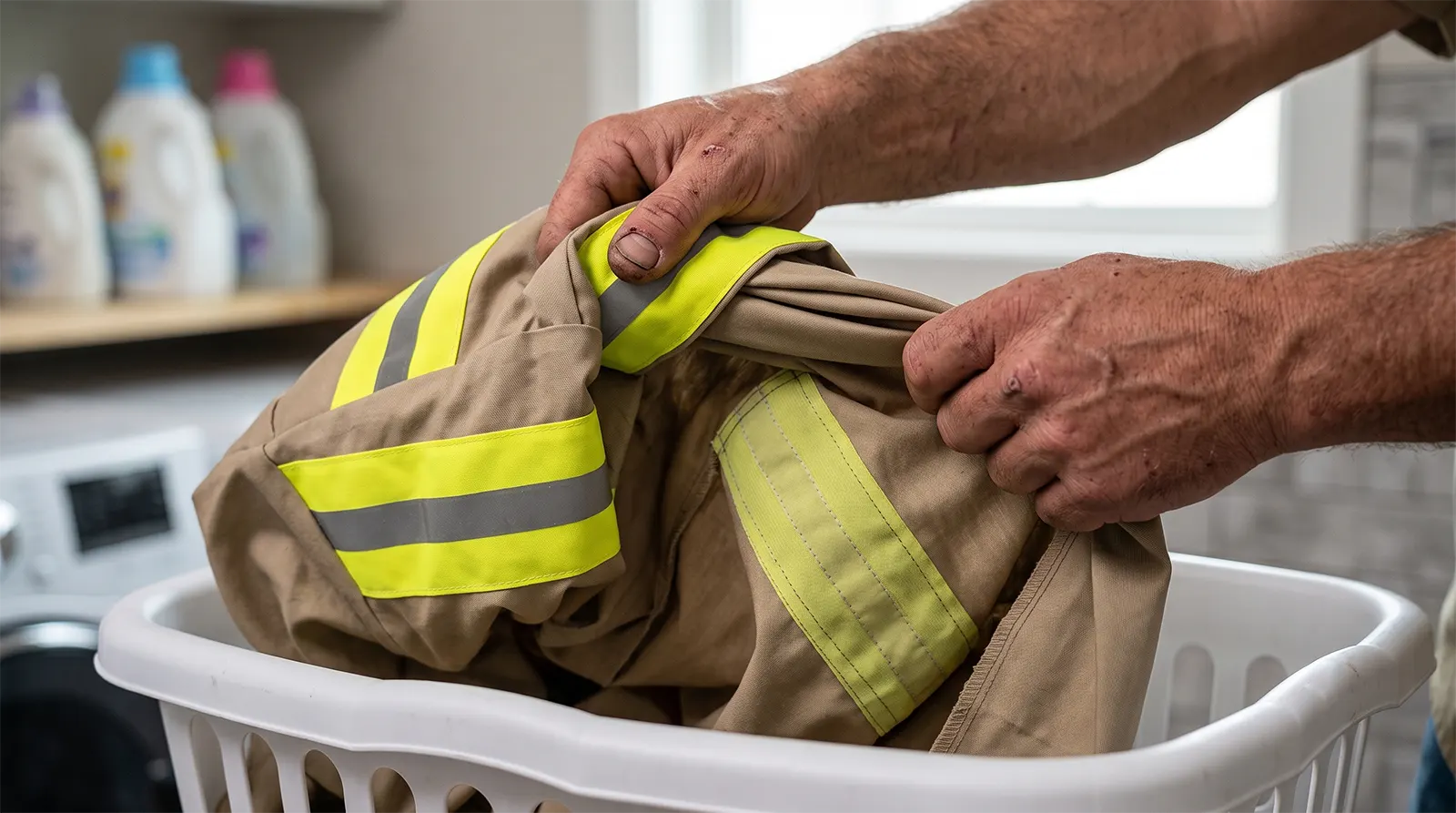
- Turn garments INSIDE OUT. This is critical. It protects the reflective tape from the physical agitation of the washing machine drum and other garments.
- Wash separately. Never wash hi-vis gear with heavy, rough fabrics like jeans or canvas work pants. The abrasion acts like sandpaper on the tape surface.
Step 2 – Machine Settings & Detergent
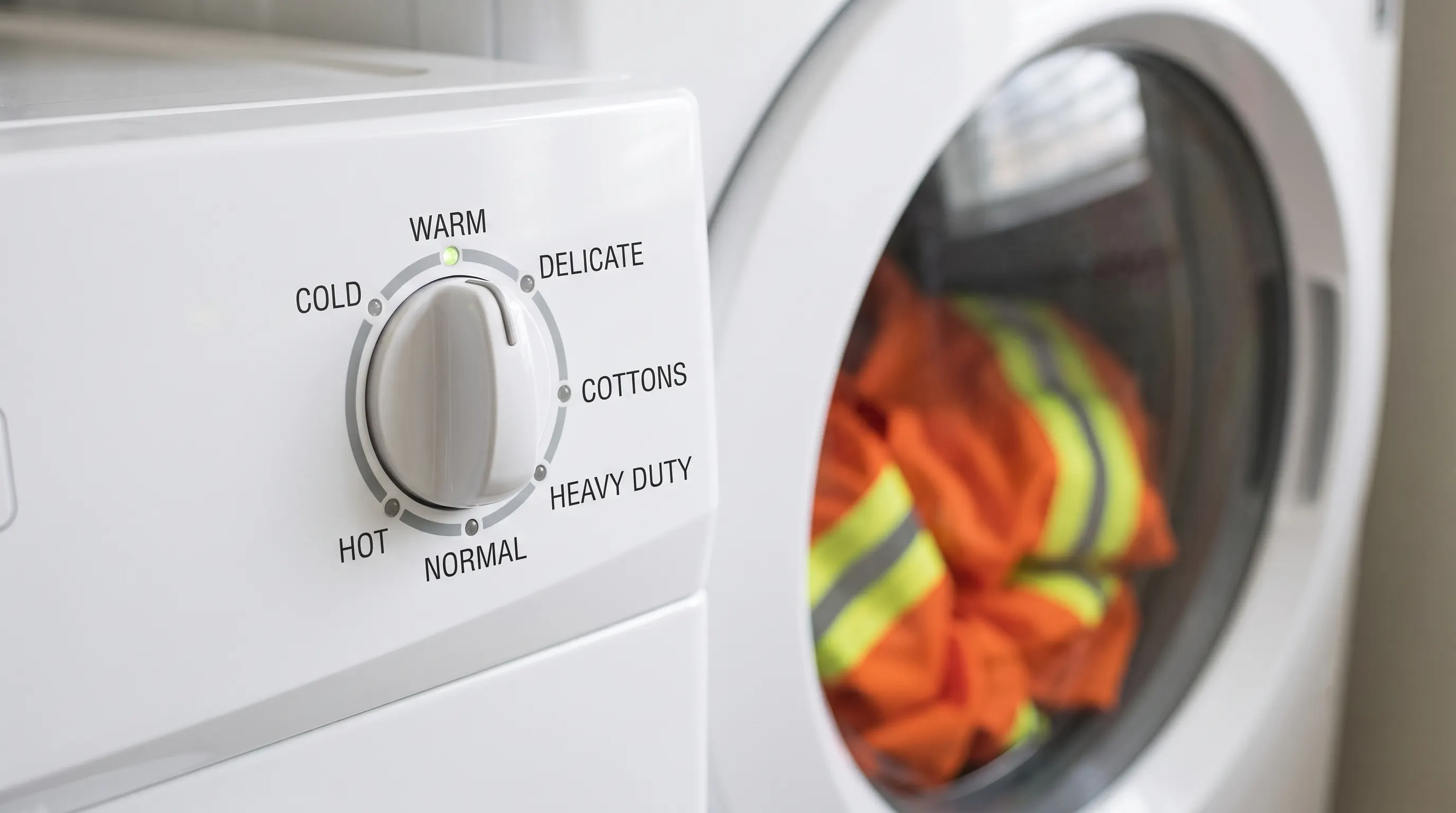
- Use COLD WATER only. Hot water softens the adhesive interface beneath the reflective film.
- Select a DELICATE or GENTLE cycle to minimize mechanical agitation.
- Use a mild, bleach-free detergent.
- Absolutely NO BLEACH and NO FABRIC SOFTENER. Bleach chemically destroys the retroreflective glass bead layer permanently. Fabric softener deposits wax compounds on the tape surface that block light reflection.
⚠️ Treating Heavy Grease & Industrial Stains
For heavy grease or motor oil, pre-treat the fabric area gently using a mild, bleach-free stain remover. Apply to the fabric surface only. Do not apply stain remover directly on or scrub the reflective tape. Blot gently with a clean cloth and let sit 5-10 minutes before washing.
Drying Your Hi-Vis Workwear
How you dry hi-vis gear is just as critical as how you wash it. High heat is the second most common cause of premature tape failure after industrial chemical damage.
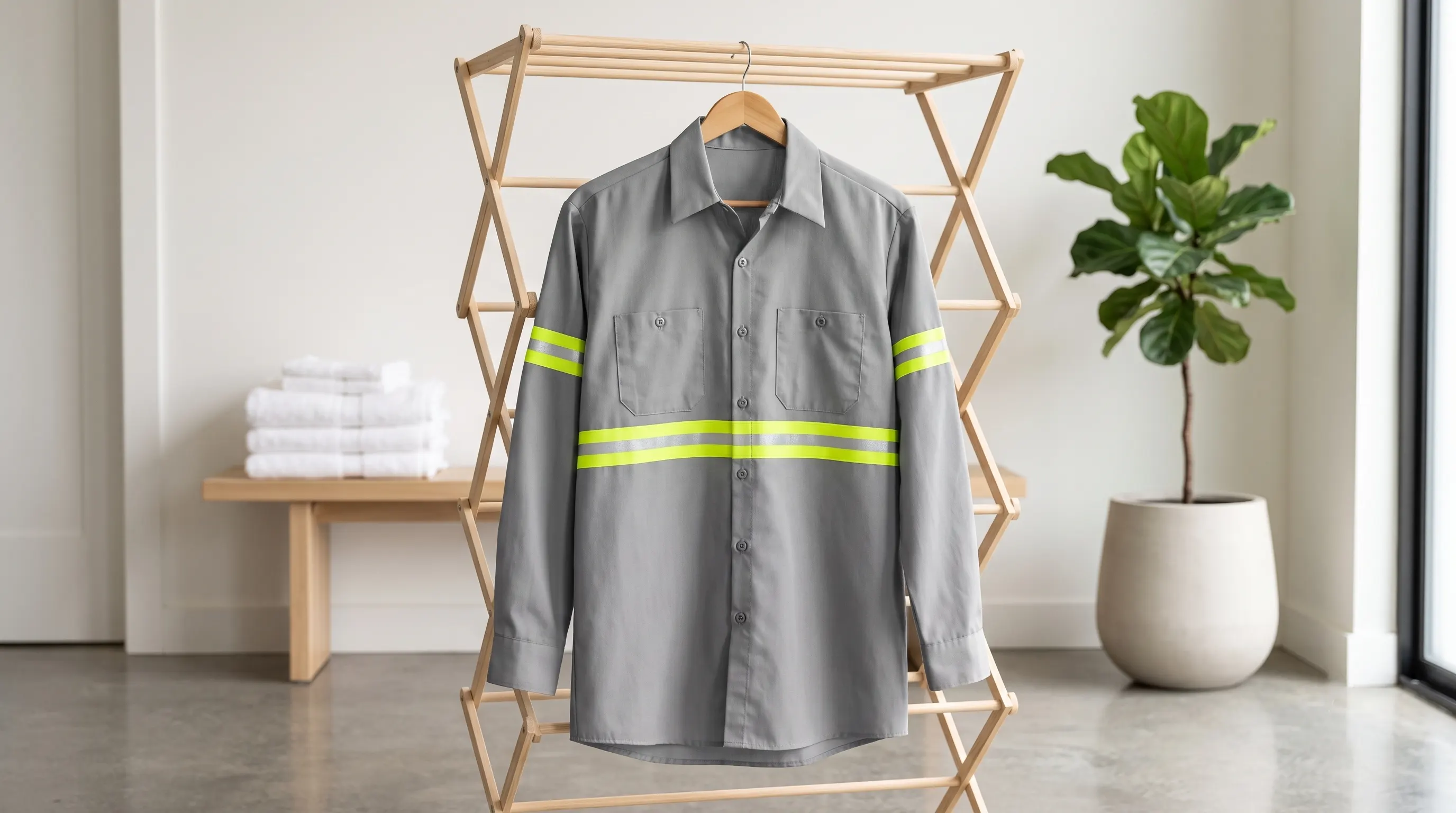
- Best – Air Dry / Line Dry: Hang in the shade if possible. Prolonged direct sunlight can fade bright fluorescent colors.
- Acceptable – Machine Dry on Lowest Heat: If you must use a dryer, select the LOWEST HEAT or NO HEAT (AIR FLUFF) setting only. Remove the garment immediately when the cycle finishes.
- Never: High or medium dryer heat. No exceptions.
The Liliana Hi Vis Advantage: Built to Outlast Proper Care
We take pride in using quality base garments and applying durable, sewn-on reflective tape right here in South Carolina. Unlike cheap heat-transfer press-on tape that peels after just a few cycles, our heavy-duty mechanical stitching permanently locks the reflective striping into the structural seams of the garment – meaning it physically cannot delaminate from the fabric. For a deeper look at why tape construction matters, read our full guide on sewn-on vs heat-transfer reflective tape.
Invest in Workwear That Holds Up Wash After Wash
Stop replacing safety gear every season. Our custom-sewn workwear uses permanently sewn-on reflective tape engineered to outlast the garment itself. Browse our hi-vis shirts, durable reflective work pants, or custom sewn-on uniform programs assembled right here in South Carolina. Have questions about our tape durability? Check out our FAQ.